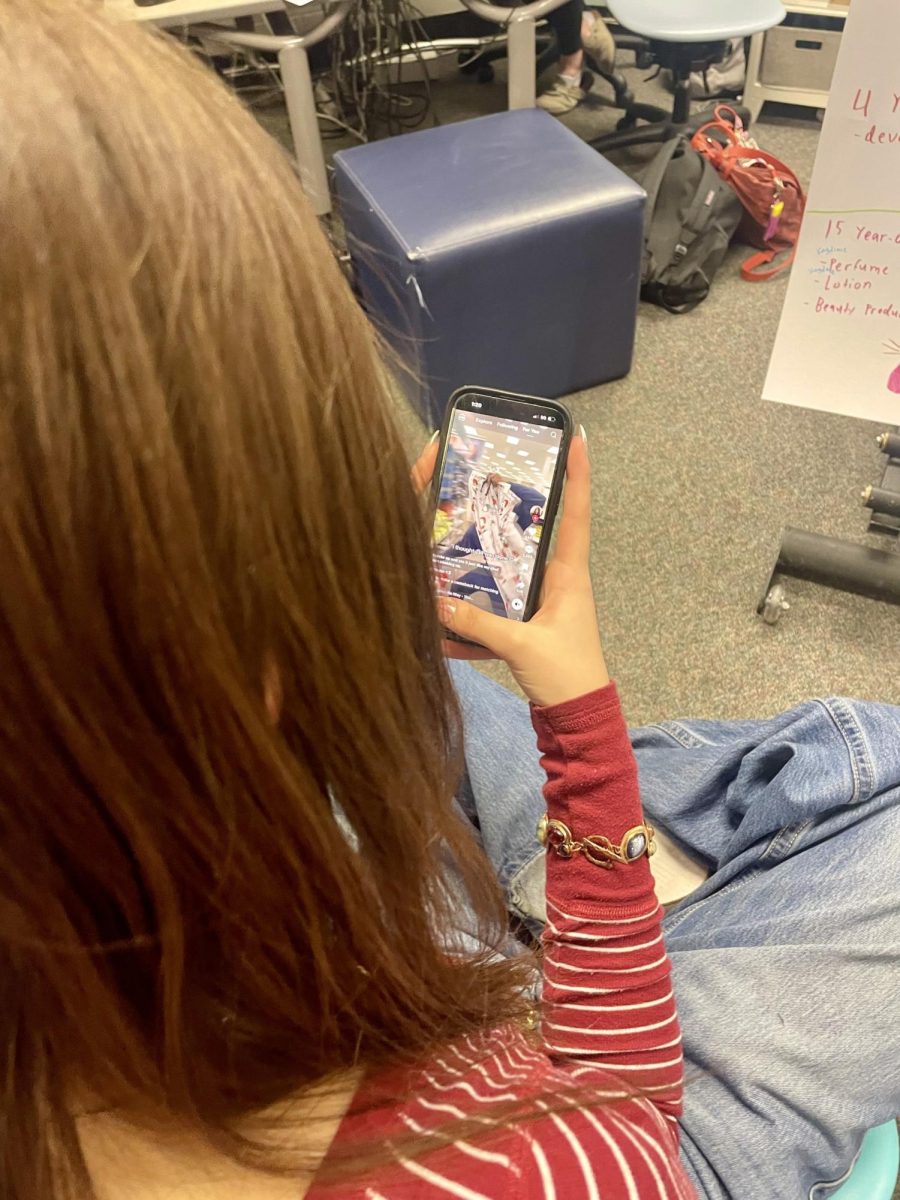
Most of us scroll through our feeds without thinking about who decided what we see. One minute you’re watching a funny video, and the next you’re deep in a debate about politics, or stumbling upon a struggling family from a foreign country. It feels random- but it’s not. Every post, video, and opinion you come across online has been carefully placed there by an algorithm that studies what you’re watching.
According to BBC Education, 47% of teenagers trust the news they see on social media. Unfortunately, what we don’t see is how the information is filtered and personalized to fit what we already believe in. It doesn’t accurately reflect reality, but instead, it’s a warped version of it. As a result, our understanding of current events, politics, and even each other is shaped by these invisible systems, which are designed solely to capture our attention rather than inform us. We think we are forming our own opinions online, but the truth is, our feeds are quietly shaping them for us.
Social media algorithms are built on one simple idea- keeping their consumers’ attention for as long as possible. Every like, comment, share, and even pause dictates what you see on your feed. They’re looking for anything that keeps you engaged, anything that evokes an emotional reaction out of you- both negative or positive. Once the algorithm determines this, it starts feeding you more of the same content, piece by piece, until your feed reflects a very specific version of the world. Whether you lean left, right, or fall somewhere in between, your social media feeds will present content that matches those opinions.
Over time, this creates a loop. You see more of what you agree with, and less of everything else. When this happens, it becomes harder and harder to tell what’s real, what’s biased, and what is made only to capture your attention.
Constant exposure to outrage and argument has a real effect on how people feel. The line between staying informed on political issues and getting overwhelmed gets blurry fast. It’s not just about misinformation; it’s about emotional exhaustion. It’s easy to pick a side, stay updated, and keep caring about every crisis, even when you don’t feel like you can handle it anymore. The more we scroll, the more we absorb that tension. Sometimes, it doesn’t leave when we close the app.
We can’t really escape algorithms, but we can be smarter about how we interact with them. The most powerful thing any of us can do is choose where we put our attention. That means following a mix of perspectives and remembering that not everything you see deserves your energy. I’m not saying you have to delete your social media; instead, simply start to notice how it affects your thoughts and opinions.
Social media is more politically influential than we think, but it’s also more emotionally invasive. The more aware we are of that influence, the more control we have over how it shapes us. Because if algorithms can quietly mold our opinions, they can shape our moods too- and that’s a kind of power we shouldn’t give away so easily.