
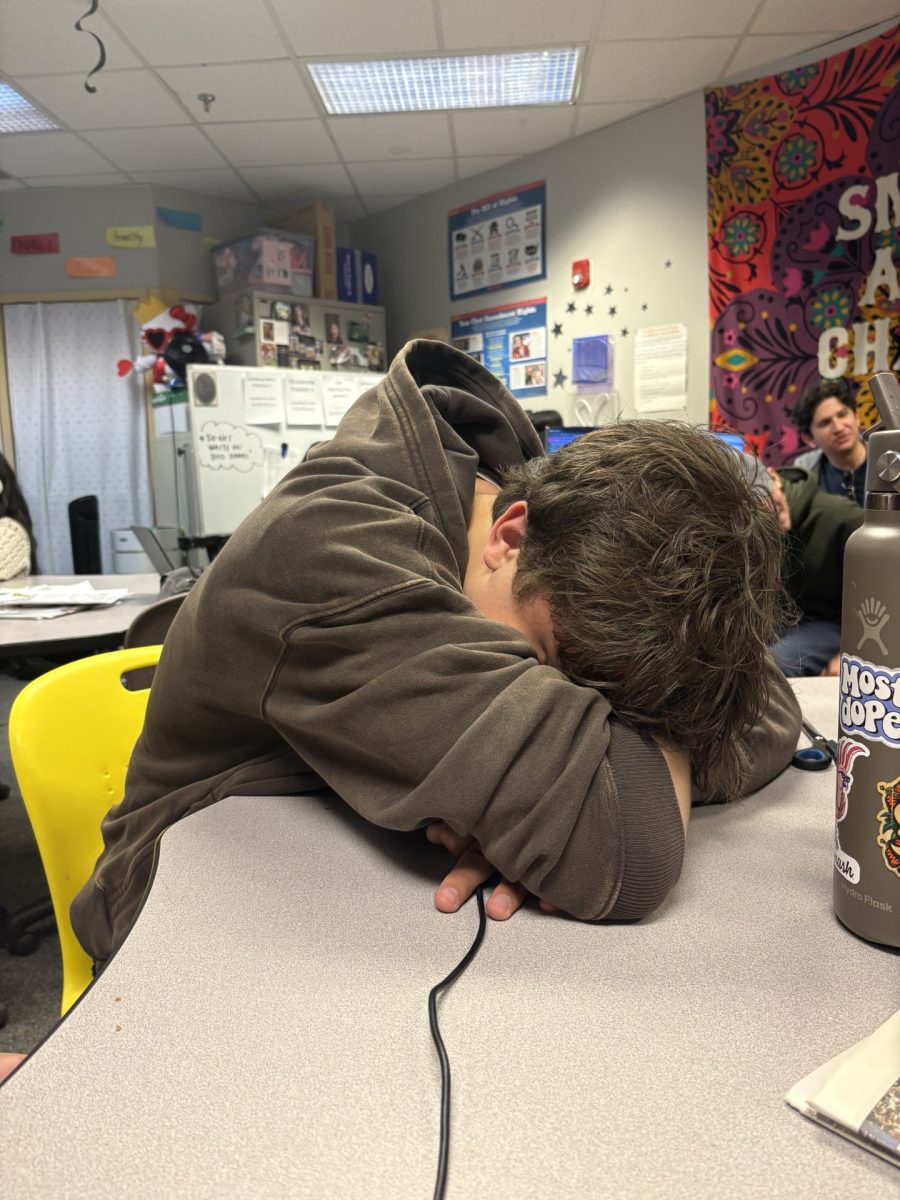
The bell rings for first period, but half the class is already fighting to stay awake. Everyone has been there. But most teens don’t realize the effect that sleep- or lack thereof- really has on their lives. Nearly 70% of high schoolers don’t get enough sleep, yet they’re still expected to perform at their best.
According to Johns Hopkins pediatrician Michael Crocetti, M.D., M.P.H., teens need 9 to 9½ hours of sleep per night. Sleep deprivation is defined as not getting enough sleep, which typically means less than 7-8 hours. It is estimated that over 75% of high school students have sleep deprivation.
So why does this matter? Many teens don’t realize that lack of sleep not only has a negative effect on grades and academic performance, but also on mental and physical health.
Academic performance decline can be seen in lower grades and test scores, trouble focusing, and memory issues. Over time, this leads to lower grades and lower confidence in academic performance.
Beyond academics, lack of sleep is also closely linked to negative mental health in teenagers. Students who don’t get enough sleep have an increased risk of depression, anxiety, chronic stress, and suicidal ideation. It also impairs emotional regulation, leading to mood swings, irritability, impulsivity, and reduced ability to cope with daily stressors.
Lack of sleep also affects teen’s physical health. It increases the risk of obesity, type 2 diabetes, weakened immune function, and higher injury rates. Chronic deprivation leads to slowed reaction times, impaired growth and development, and increased cardiovascular risks.
Rocky junior Yuki Wallender says she usually aims to go to bed around 10:30 to 11:00. “I notice when I consistently don’t get enough sleep, I get more tired throughout the day. It’s also harder to wake up in the morning,” she says. “It helps my focus and overall health when I get good sleep every night.”
Despite how important sleep is, it’s often the first thing sacrificed as a high school student. Understanding the importance of sleep deprivation means also recognizing the impact that the small nightly choices add up.
Consider implementing simple changes to improve overall well-being. For example, putting your phone down for 30-60 minutes before bed, and creating a shorter nighttime routine can make it easier to fall asleep earlier. Even starting small with going to bed 15 minutes earlier each night can make a noticeable difference.
Choosing to go to bed earlier is not about being less tired throughout the day, but it’s about protecting your focus, health, and future. For teens balancing school, activities, and social lives, sleep may start to feel optional, when in reality, it is one of the most important factors in overall well-being.













Rose Kensora • Apr 23, 2026 at 10:55 am
YES sleep is so important! I prioritize it above everything!
Sawyer L Johnston • Apr 23, 2026 at 10:51 am
I think this is a really good point, and I definitely could work towards some goals to help me sleep better.
MacKenzie Klith • Apr 23, 2026 at 10:48 am
This is so important for people to know!
sophia • Apr 23, 2026 at 10:48 am
I’ve noticed I struggle in class when I don’t get enough sleep. Making sleep a bigger priority is a really good idea.
Charlotte • Apr 23, 2026 at 10:47 am
I knew highschoolers don’t get enough sleep but I didn’t know 70% of them don’t