Ever since I learned how to write, I’ve been writing.
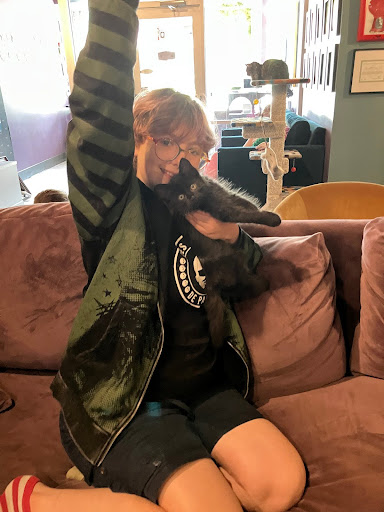
Back in elementary school, I chose to write anytime I had time to myself; I wrote about this purple cat named Midnight who was the princess of the Shadow Realm. She was immortal (though I called her a mortal because I didn’t know the difference between the two words) and unstoppable— not a very compelling or interesting character by any means, but she holds a special place in my heart. She is what compelled me to write, and as the years went on, I grew my writing skills.
Obviously, one of the best ways to grow as a writer is to keep writing and to do so often, but a few other tips helped me grow to where I am now, and of course, I’m still learning.
When it comes to writing, you will always keep learning; there is no point at which you will have mastered everything about writing.
Compel your readers.
One of the best things to keep in mind when writing is to compel your readers. Create something they want to read and optimize every sentence to be interesting and important to the overall narrative.
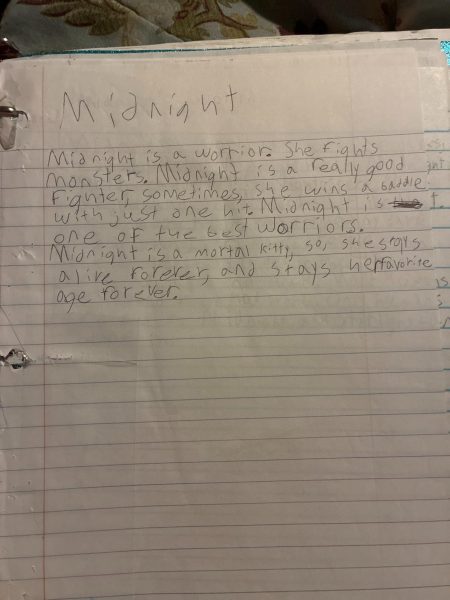
In the example above, disregarding the spelling errors, “Midnight is a worrior. She fights monsters. Midnight is a really good fighter, sometimes she wins a baddle with just one hit.”
All things considered, the spelling and grammar isn’t too bad for a 3rd grader, but it is extremely boring. Instead of telling the reader she is a warrior and she is really powerful, it would be a lot more compelling if I show it in action, and maybe even hint at a backstory or a reason why she is so powerful.
“Midnight, with her vicious claws tore through the monster’s tough skin, ending it in a single strike. Her eyes glowed with malice as she sought to protect her kingdom; she was willing to do anything it took to ensure its safety.”
In this revised version, I described her claws as violent, showing how powerful and dangerous they are, and I decided to show her royal status by showing how she wants to protect her kingdom, though while she does so, she comes across as a utilitarian tyrant. She defeats the monsters with ease and power, and in turn is almost monstrous.
Always put your readers first and create something that is worth reading. Instead of telling you Midnight is a warrior and she wins battles with one hit, I showed it in action to show her power. In your writing you can have an interesting topic, but just having an interesting idea won’t compel anyone.
A great way to practice compelling your readers is to generate a story idea and focus on making each sentence matter to the overall narrative. Then, have someone read it and mark each sentence that is boring or unnecessary and remove or edit them. Another great way of practicing this is to edit an existing story; feel free to do so with my Midnight story.
Start writing!
Sometimes I get overwhelmed thinking about creating an outline, world building, developing characters, and all the work needed to create a giant narrative. One of the best pieces of advice I received regarding this is to just start writing. It doesn’t matter if it’s good or not, and regardless, good is subjective. One of my favorite short stories I have written I did without an outline!
Getting into the habit of just writing is incredibly helpful. Remember, you can always edit it later, just focus on getting the words out and get into the groove of writing. When I start writing, I can do so for hours on end with a cohesive flow. Writing for a long time might be hard at first, but if you write enough, soon it will become second nature.
Related to writing without an outline or anything, don’t focus on editing it. Sometimes when you are in the groove of writing, editing every sentence as you write will slow you down. Save the editing for later.
Active voice vs. passive voice.
Active voice is when the subject performs the action, and passive voice is when the subject receives the action. Passive voice can be useful sometimes, but generally it should be avoided. Active voice, on the other hand, is more clear and direct.
A passive voice can be very impactful when used to emphasize a character’s lack of control and when they feel helpless. It directs the attention of the sentence as what is happening to them rather than what they are doing. Passive voice can make the sentence less clear, which is why using active voice is generally better.
Passive voice: “The monster was attacked by Midnight.”
Active voice: “Midnight attacked the monster.”
The active voice has a clearer focus and generally leads to stronger sentences. Beginner writers tend to struggle with active vs. passive voice and tend to overuse passive voice. Avoiding passive voice allows for more interest and clarity to your writing.
Vary sentence length.
A great way to add depth to a story is to vary your sentence length. Additionally, depending on the situation, it can convey different moods.
Short. Choppy. Sentences.
Long-winded, exciting sentences, right in the middle of conflict–the hero is facing the villain–what will they do?
These varying sentence lengths can convey different ideas and keep your reader engaged. Stories that have little to no variety are too predictable and boring. Keep it unpredictable– change up the length.
Read often.
Finally, the most important piece of advice I can giveis to read often. Reading many stories will give you insight into different writing styles and help you develop your own unique voice. Additionally, reading will help you learn more words, help you understand grammar, give you inspiration, and so much more.
For even more writing tips, look here.