
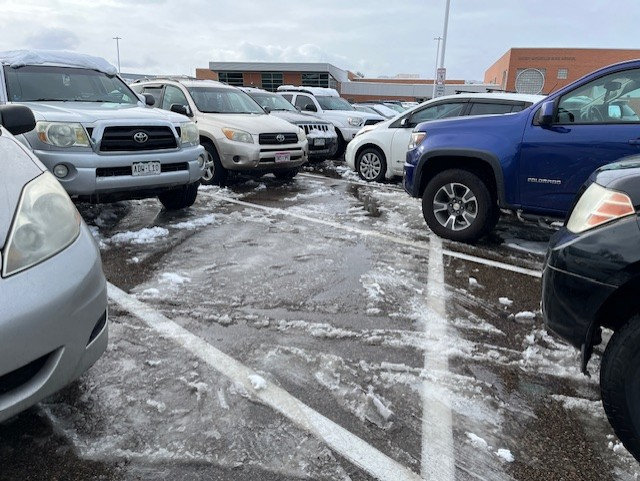
Well, it snowed– and you know what that means…bad parking! Once buried, it seems the once so important parking lines lose all of their gravitas. However, there is a bit more to the chaos in the junior and senior lots than you might think. So, even if it is just to cope with my own questionable parking, let’s jump into the science behind bad parking in snowy weather.
Let’s start with the obvious. Snow erases many of the visual cues we rely on to find our spots, leaving us to rely on other cars instead. Like dominoes, a slightly crooked car throws off the next, and before long someone manages to park perpendicular to the rows. This cascading effect is real. With a lack of information, our brains compensate with geometrically imagining the parking spots, dictated by whoever arrives earliest. If they’re angled just a little, everyone else unknowingly copies it.
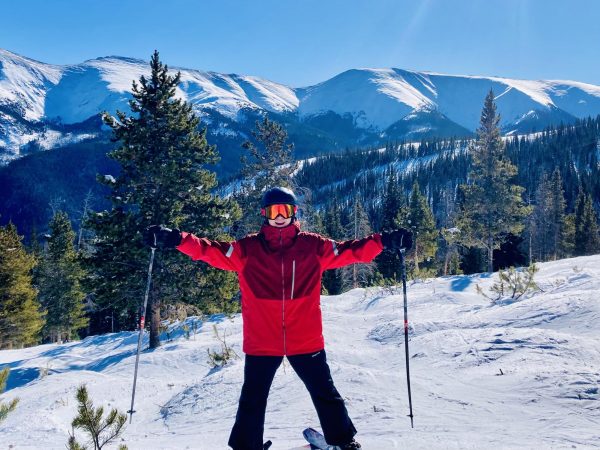
Then there’s depth perception. If you’ve ever been skiing or snowboarding, then you know the taste of snow after launching over a bump that came out of nowhere. Parking in snow works the same way. The bright colors of the snow remove any of the visual contrast and replace it with glare, reducing the ability to properly judge spacing. When it is actively snowing, flakes don’t help but hinder. The snowflakes create visual noise scattering light, and further flatten your sense of depth. Being lighter, the white is very reflective to any light waves, and wipes out any shadows your brain normally uses to comprehend shape. Without the shadows, everything can look equally flat and equidistant.
We can’t forget the slipping and sliding. Even if you are a self proclaimed “good driver” in the snow, winter surfaces could be humbling you- without even realizing. Snow, ice, or slush can unpredictably change the friction of your tires. Even in undesirable amounts, these small variations can pile up and cause drastically different parking jobs. The cold temperatures also decrease your tire pressure and thicken the fluids inside of your car, resulting in a less reactive steering response. The first few cars that set tire tracks through the snow form tracks for your tires to follow and without even turning, you are guided into a crooked angle.
And then, of course, there is laziness. When it’s freezing cold outside, who wants to take a second to straighten out– or even slow down–to park well at all? Psychologists call this phenomenon thermal discomfort avoidance. When cold, human nature kicks in as people unconsciously prioritize speed over precision. It is impossible to find the motivation to park well when faced with the cold slog into first period. The cold weather also causes a slower reaction time and a decrease in fine motor control. Combined with your brain before coffee, it can make bad parking seem “good enough.”
So, next time it snows and you are making fun of your friend whose car is triple parked so they can’t go out to lunch, you can think about all the winter physics, bad visibility, and instincts working against them. In the end, we are all just guessing, and in most cases– not really trying that hard.




brooks • Dec 18, 2025 at 10:51 am
snowbody can see